

 See My Latest Article on HelloNation
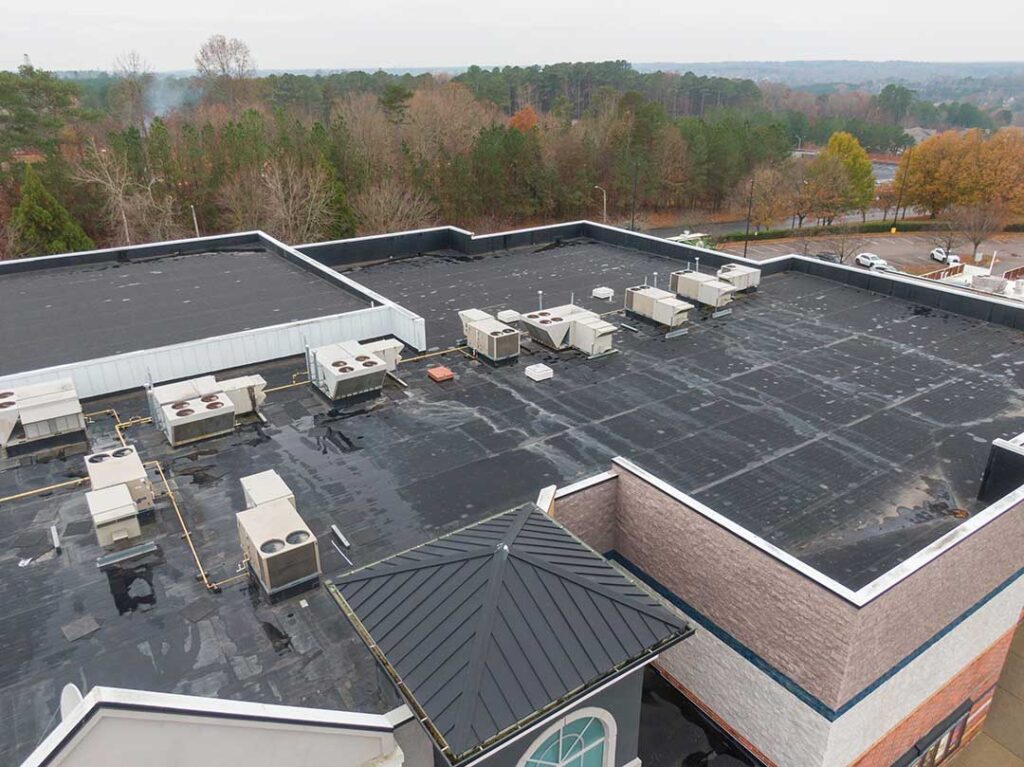
Flat roofs are common on offices, warehouses, retail buildings, schools, and other commercial properties because they use space efficiently and can simplify construction. In Cheyenne, WY, however, a flat roof must be designed and maintained for strong wind, snow, hail, rapid temperature changes, and repeated freeze-thaw conditions.
“Flat roof” is a common term, but most commercial systems are actually low-slope roofs. They are built with a slight pitch so water can move toward drains, scuppers, or roof edges. The difference between a dependable system and a troublesome one often comes down to drainage design, materials, insulation, and maintenance.
Why are flat roofs so common on commercial buildings?
Flat and low-slope roofs allow a building to have a simple roofline and a large, usable interior floor area. They also make it easier to place mechanical equipment, vents, skylights, solar equipment, and other building systems above the occupied space.
Compared with steeply sloped roofing, low-slope construction may reduce the amount of exterior wall and roof framing required. This can be useful for large buildings where a pitched roof would create unused attic volume.
Other practical advantages include:
- Easier access for inspections and maintenance
- Efficient use of rooftop space
- Compatibility with broad, continuous waterproofing membranes
- Flexible insulation placement above the structural deck
- A relatively low visual profile
These benefits explain why low-slope roofs are widely used for commercial construction. They do not mean the roof is maintenance-free or that water should remain on the surface.
What are the main advantages of a flat roof?
The biggest advantages are usable roof area, straightforward building design, and adaptability to commercial equipment.
A low-slope roof can support rooftop heating, ventilation, and air-conditioning equipment without requiring tall support structures. Access routes and service areas can also be planned directly into the roof layout.
The broad surface makes several roofing systems possible, including single-ply membranes, modified bitumen, built-up roofing, and some fluid-applied systems. Each has different strengths related to weather resistance, repair methods, installation conditions, and expected service life.
Low-slope roofs can also make insulation upgrades more practical. Adding or replacing insulation above the roof deck may improve energy performance while reducing thermal bridging through the building structure. That can help stabilize indoor temperatures in buildings exposed to Cheyenne’s cold winters, sunny summer conditions, and frequent wind.
Another advantage is that repairs can often be localized when the source of a problem is easy to identify. A damaged membrane seam, puncture, flashing detail, or drain connection may be repairable without replacing the entire roof. The result depends heavily on the age and condition of the surrounding materials.
What are the disadvantages of a flat roof?
The primary disadvantage is that drainage is less forgiving. A steep roof sheds water quickly by gravity. A low-slope roof depends on carefully built slopes, clear drains, properly sealed penetrations, and functioning emergency drainage.
If water remains on the roof after normal precipitation, the condition is called ponding. Persistent ponding can add weight, accelerate membrane deterioration, worsen leaks, and contribute to insulation damage. Water may also freeze, expand, and reopen small defects during winter.
Other disadvantages include:
- Greater sensitivity to clogged drains and scuppers
- More exposed seams, flashing, and rooftop penetrations
- Potential for wind uplift at edges and corners
- Difficulty locating the exact source of an interior leak
- Damage risks from careless foot traffic or equipment work
- Maintenance requirements that may be overlooked because the roof is not visible from the ground
A ceiling stain does not always appear directly below the roof defect. Water can travel through insulation, along decking, or beside structural members before entering the occupied space.
How does Cheyenne’s climate affect flat roofs?
Local weather makes roof design and inspection especially important. The area experiences cold temperatures, snow, strong winds, hail exposure, intense sunlight, and large temperature swings. These conditions can stress both the membrane and the building’s drainage system.
Snow is not automatically a problem for a properly designed roof. The concern is whether the structure, insulation, membrane, and drainage details were designed for expected loads, drifting, and uneven accumulation. Snow can collect near parapet walls, rooftop equipment, higher roof sections, and areas where wind changes direction.
Wind can lift or flex roofing materials, particularly around corners, edges, parapets, and rooftop penetrations. A roof may appear intact from above while its attachment or flashing has weakened underneath.
Freeze-thaw cycles create another challenge. Water that enters a small opening may freeze and expand, enlarging the defect. Repeated cycling can affect seams, coatings, flashing, sealants, and masonry transitions.
Hail may damage membranes, metal components, rooftop equipment, and protective surfacing. Some damage is visible immediately, while other impacts gradually shorten the roof’s service life.
Does a flat roof have to be completely level?
No. Commercial low-slope roofs should have positive drainage rather than being perfectly horizontal. Building codes commonly require roof systems to be designed with a minimum slope, often approximately one-quarter inch per foot for many membrane applications, although the applicable requirement depends on the roof system and project conditions.
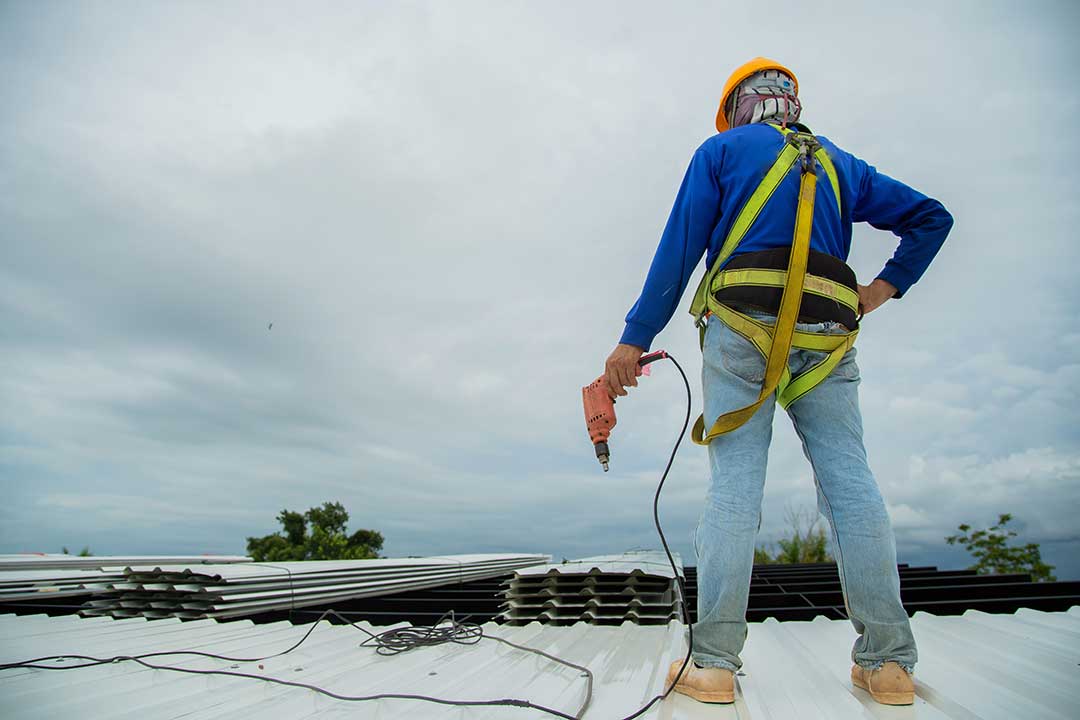
Drainage may be created through tapered insulation, sloped structural framing, crickets, saddles, internal drains, scuppers, or gutters. The design should also account for overflow drainage if primary drains become blocked.
A roof that looks flat from the ground may have carefully shaped slopes that are difficult to see. Conversely, an older roof can lose effective drainage if insulation compresses, decking settles, or previous repairs create uneven areas.
Which roofing materials are used on commercial flat roofs?
Common systems include:
- Single-ply membranes: Flexible sheets made from materials such as thermoplastic or thermoset polymers. Seams may be heat-welded, chemically bonded, or adhered.
- Modified bitumen: Layered asphalt-based materials designed for commercial low-slope applications.
- Built-up roofing: Multiple layers of reinforcing fabric and asphalt, often finished with a protective surface.
- Fluid-applied roofing: Liquid materials that cure into a continuous coating over a prepared roof surface.
No single material is best for every building. The right choice depends on the existing deck, insulation, roof slope, drainage, rooftop equipment, expected foot traffic, fire requirements, wind exposure, repair history, and budget over the entire service life.
What maintenance does a flat roof need?
Routine maintenance is one of the strongest factors affecting performance. At minimum, building owners or facility managers should track roof inspections after major storms and at regular intervals.
Useful inspection points include:
- Drains, scuppers, gutters, and strainers
- Membrane seams and edge details
- Flashing around walls, curbs, vents, and pipes
- Areas near rooftop equipment
- Punctures, blisters, exposed reinforcement, or loose materials
- Interior ceilings, insulation, and wall areas below roof penetrations
- Signs of standing water lasting beyond normal drying time
Snow or ice should not be removed casually. Unplanned shoveling, sharp tools, or concentrated piles can damage a membrane or create uneven structural loading. If snow accumulation appears excessive or the building shows signs of distress, such as unusual sounds, sagging, sticking doors, or new structural cracks, the area should be treated as a safety concern.
Is a flat roof a good choice for a business?
A flat roof can be a practical choice when the building benefits from rooftop equipment, usable roof area, simple geometry, and efficient insulation. It is less suitable when drainage is poorly planned, access is neglected, or the building’s structure and roof details are not matched to local weather.
The most useful question is not whether flat roofs are universally good or bad. It is whether a particular roof has adequate slope, drainage, attachment, insulation, flashing, structural capacity, and maintenance planning for its building and environment. In Cheyenne, those details matter because a roof must manage more than rain: it must also withstand snow, wind, hail, sunlight, and repeated freezing conditions.