

 See My Latest Article on HelloNation
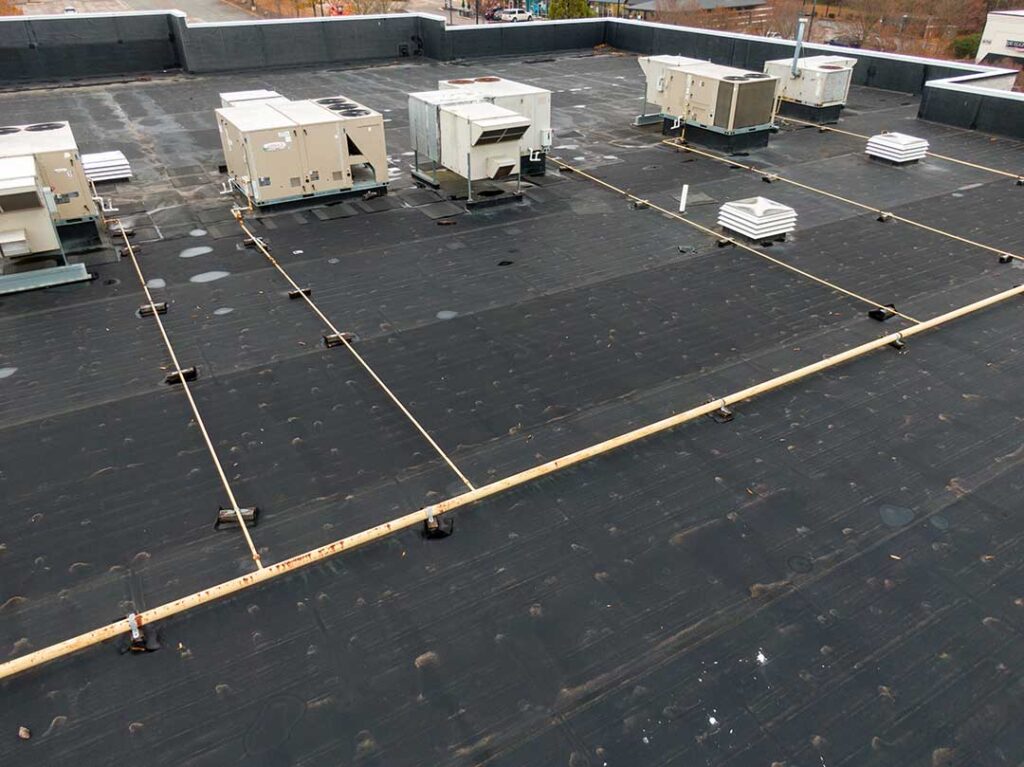
How long does a commercial roof typically last?
A commercial roof typically lasts 15 to 40 years, depending on the roofing system, installation quality, building use, weather exposure, and maintenance history. Some systems may perform longer, while severe storm damage or poor drainage can shorten their useful life considerably.
For buildings in Cheyenne, roof longevity is influenced by strong wind, hail, snow, intense sunlight, and repeated freeze-thaw cycles. Because of those conditions, the calendar age of a roof matters, but its current condition matters more.
A roof installed 20 years ago may still have serviceable life if it has been maintained and protected from major damage. Another roof only 10 years old may need extensive repairs if it has experienced ponding water, hail impact, membrane punctures, or installation problems.
What is the expected lifespan of common commercial roofing systems?
Different materials age at different rates. Typical ranges include:
- TPO and PVC single-ply membranes: about 20 to 30 years with proper installation and maintenance
- EPDM rubber membranes: about 20 to 30 years
- Modified bitumen: about 15 to 25 years
- Built-up roofing: about 20 to 30 years
- Metal roofing: approximately 30 to 50 years, although fasteners, coatings, seams, and penetrations may require earlier work
- Spray polyurethane foam: often 25 to 30 years or more when protective coatings are renewed and damaged areas are repaired
- Roof coatings: commonly 10 to 20 years per coating cycle, depending on the product, thickness, preparation, and exposure
These are planning ranges rather than guarantees. A manufacturer’s warranty may cover a narrower period and may address material defects without covering every cause of failure. A warranty length should not be treated as a precise expiration date.
Why can roofs in Cheyenne age differently?
Local weather can affect a roof in several ways. High winds may lift membrane edges, loosen flashing, stress seams, and move unsecured rooftop equipment. Hail can bruise or puncture membranes, damage metal panels, and weaken protective surfaces even when a leak is not immediately visible.
Snow and ice create additional concerns. Accumulated snow adds weight, while melting and refreezing can expose weaknesses around drains, curbs, wall transitions, and penetrations. Freeze-thaw movement may also open small cracks or separate aging sealants.
Strong sunlight contributes to long-term ultraviolet degradation. Roof surfaces can become brittle, lose flexibility, or experience shrinking and splitting as materials age. A roof that receives little maintenance may deteriorate faster than a similar system in a milder environment.
Does a flat commercial roof last as long as a sloped roof?
A low-slope roof can last just as long as a sloped system when it is correctly designed, properly drained, and maintained. The phrase “flat roof” usually refers to a roof with a slight slope rather than a perfectly level surface.
Drainage is the critical issue. Water that remains on the roof for extended periods can accelerate membrane deterioration, stress seams, encourage biological growth, and increase the chance of leaks around penetrations. Blocked drains, undersized drainage systems, damaged insulation, or structural deflection can all contribute to ponding.
A low-slope roof should be evaluated after major storms and periodically checked for blocked drains, deteriorated flashing, open seams, surface damage, and areas where water remains after precipitation has ended.
What shortens a commercial roof’s service life?
The most common causes of premature aging are not limited to the roofing material itself. They include:
- Poor installation or inadequate attachment
- Improperly sealed seams and penetrations
- Standing water caused by drainage problems
- Repeated foot traffic from maintenance activities
- Unprotected equipment work on the roof
- Hail and wind damage
- Abandoned or poorly sealed openings
- Shrinking, cracking, or deteriorated flashing
- Mechanical damage from tools, debris, or snow removal
- Lack of inspection after severe weather
- Interior moisture problems that affect roof insulation or decking
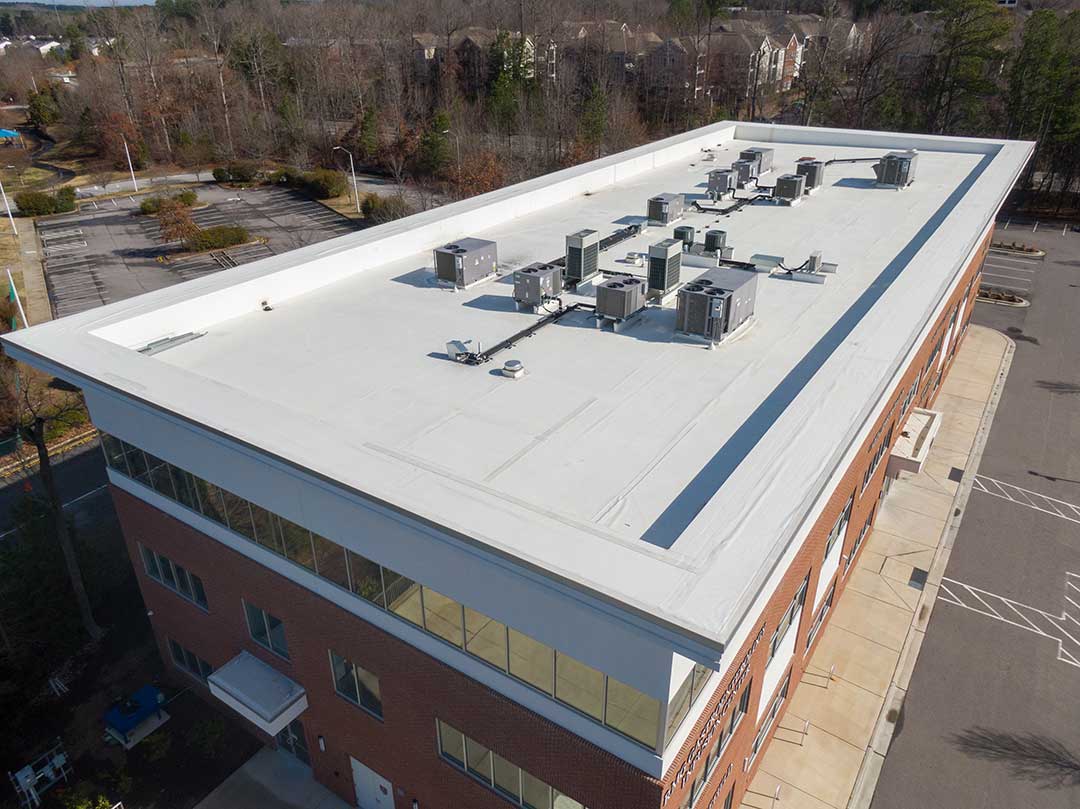
Rooftop heating, ventilation, and cooling equipment can also create wear points. Service personnel may walk across the membrane repeatedly, drop tools, or disturb flashing around equipment. Walk pads and clearly defined access routes can reduce unnecessary damage.
How often should a commercial roof be inspected?
A commercial roof should generally be inspected at least twice a year, along with additional inspections after hail, high wind, heavy snow, or unusual water intrusion. Spring and fall are practical times because they allow property owners to identify winter damage and prepare for colder weather.
Inspections should look at the roof surface as well as the details that commonly fail first:
- Drains, scuppers, gutters, and downspouts
- Membrane seams and fasteners
- Flashing at walls, curbs, and edges
- Roof penetrations and pipe boots
- Expansion joints
- Metal coping and edge securement
- Areas beneath rooftop equipment
- Signs of ponding water or interior staining
A written inspection record with dated photographs makes it easier to track gradual changes. It can also distinguish normal aging from sudden storm damage.
How can a property owner tell whether a roof needs repair or replacement?
A roof may be a candidate for repair when damage is localized, the drainage system works properly, the insulation and deck remain sound, and most of the membrane still has useful flexibility and strength.
Replacement becomes more likely when problems are widespread or recurring. Warning signs include repeated leaks in different areas, extensive membrane cracking, large sections of wet insulation, widespread seam failure, persistent ponding, corrosion, or a roof surface that has reached the end of its expected service range.
Interior evidence deserves attention, but the absence of ceiling stains does not prove the roof is healthy. Some commercial roof systems can hold moisture within insulation or decking before water becomes visible inside the building.
Can maintenance extend a commercial roof’s life?
Yes. Maintenance cannot reverse advanced deterioration, but it can slow damage and preserve serviceable materials. Useful practices include keeping drainage paths clear, repairing small defects before they spread, maintaining flashing, limiting unnecessary foot traffic, and checking rooftop equipment after service work.
Storm inspections are especially valuable in a hail- and wind-exposed area. Some damage is cosmetic, while other damage reduces the roof’s ability to shed water or withstand future weather. Distinguishing between the two may require a detailed assessment rather than relying only on visible leaks.
The most reliable estimate of remaining roof life combines the system type, installation date, repair history, drainage performance, storm exposure, surface condition, and the condition of the insulation and roof deck. Age provides a starting point, but the roof’s documented condition provides the better answer.