

 See My Latest Article on HelloNation
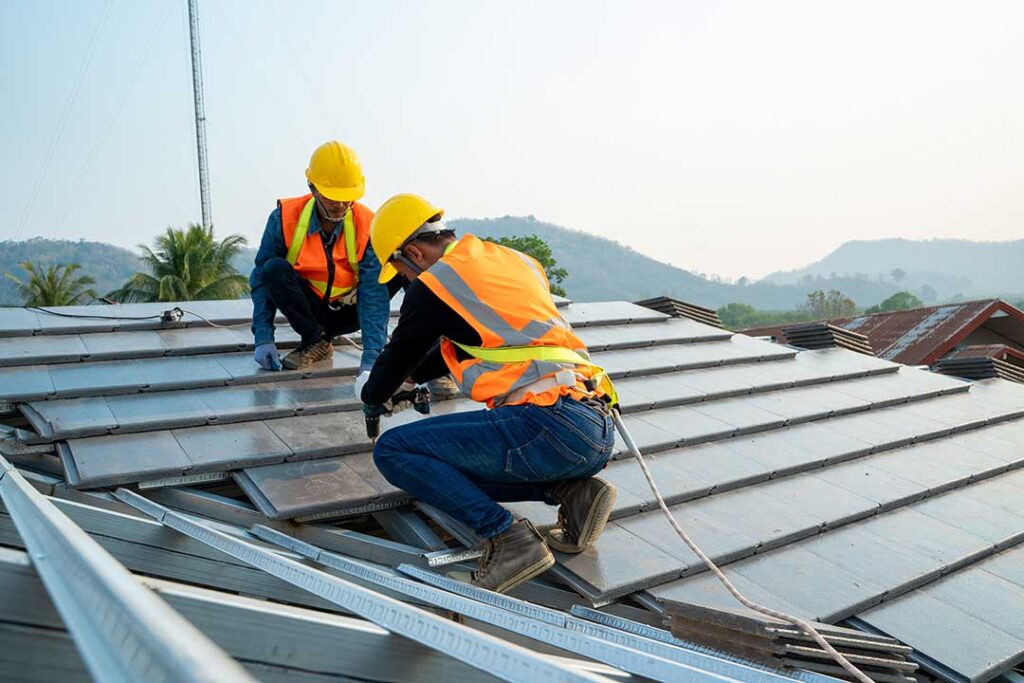
A commercial roof leak requires quick, orderly action. The first priorities are protecting people, limiting interior damage, identifying the safest temporary measure, and documenting what happened.
What should happen first when water is entering a commercial building?
Move people away from active leaks, protect electrical equipment, and contain the water if it can be done without entering a hazardous area. Do not climb onto the roof during rain, snow, high wind, lightning, or poor visibility.
Start with these immediate steps:
- Place containers under drips where safe, but do not create trip hazards.
- Use caution around outlets, light fixtures, electrical panels, computers, and machinery.
- Shut down power to affected equipment only if the electrical system can be reached safely and without standing in water.
- Block off slippery floors and mark areas where ceiling materials may fall.
- Move inventory, records, tools, and other contents away from the affected area.
- Photograph and record the leak before major cleanup changes the scene.
Water can travel a considerable distance between the roof surface and the interior ceiling. A ceiling stain or dripping light fixture may not be directly below the roof opening.
Is it safe to go onto the roof during an active leak?
Usually, no. A wet commercial roof can be extremely slippery, and wind is a serious concern in Cheyenne, where exposed conditions can change quickly. Snow, ice, hail, and frozen surfaces add further risks during colder months.
Roof access should be restricted if any of the following conditions exist:
- Lightning, strong wind, heavy rain, or blowing snow
- Standing water near roof edges, drains, skylights, or mechanical equipment
- Visible damage to the roof deck or support structure
- Soft areas, sagging membranes, or areas covered by snow
- Unprotected roof edges or missing guardrails
- Electrical hazards or rooftop equipment that may be energized
A leak inside the building does not require an immediate rooftop inspection by building occupants. In many cases, interior documentation and temporary water control are safer and more useful than attempting to locate the opening in poor conditions.
What temporary steps can limit damage?
Temporary measures should control water without creating additional roof damage. If the leak is accessible from inside the building, a bucket, waterproof container, or temporary plastic sheeting may help protect contents. Plastic should not be placed over energized equipment or attached near electrical fixtures.
If safe roof access is available under suitable weather conditions, temporary coverings may help, but they must be secured against wind and arranged so water does not drain into the building. Loose tarps, nails, screws, and improvised patches can damage roof membranes or create hazards for later workers.
Avoid:
- Cutting into the roof to “find” the leak
- Applying household caulk or roofing cement to an unknown surface
- Driving fasteners through a membrane without knowing what is below it
- Covering drains or scuppers
- Walking repeatedly over damaged insulation or soft decking
- Using heat-producing equipment near roofing materials
Temporary control is not the same as a permanent repair. A roof may continue leaking after visible dripping stops because wet insulation, concealed channels, or blocked drainage can hold water above the ceiling.
How can the source of a commercial roof leak be identified?
The visible interior location often does not match the roof entry point. Water may move along insulation joints, structural framing, utility lines, or the underside of a roof deck before appearing indoors.
Common sources include:
- Punctures or tears in a single-ply membrane
- Open seams or failed flashing
- Damaged roof edges, coping, or parapets
- Blocked drains, gutters, scuppers, or downspouts
- Failed penetrations around pipes, vents, or equipment
- Deteriorated sealants
- Hail or wind damage
- Condensation from poorly insulated or ventilated areas
- Ice-related water backup during freeze-thaw conditions
A leak that appears only during wind-driven rain may involve flashing or edge details rather than a broad failure in the field of the roof. A leak that appears after snow melts may be connected to drainage, ice buildup, or concealed damage.
What should building managers document?
Detailed records help separate a one-time incident from a recurring roof problem and may be needed for insurance, maintenance, lease, or safety records.
Document:
- Date and approximate time the leak was discovered
- Weather conditions, including rain, snow, hail, wind, or rapid temperature changes
- Exact interior areas affected
- Photos and video of active dripping, stains, damaged materials, and pooled water
- The condition of ceilings, insulation, walls, flooring, and stored contents
- Actions taken to protect people and property
- Any alarms, electrical shutdowns, equipment failures, or business interruptions
- Previous repairs or earlier leaks in the same area
Keep damaged materials until they have been photographed and properly assessed, unless they create a health or safety hazard. Wet porous materials can develop odor or microbial growth if they remain damp for an extended period.
When does a leak become an urgent safety problem?
A leaking roof requires immediate escalation when water reaches electrical systems, structural components, occupied areas, or valuable equipment. Sagging ceilings are especially serious because wet ceiling materials can become heavy and may collapse without much warning.
Clear the area if there is:
- A sagging or bulging ceiling
- Cracking, shifting, or visibly damaged structural material
- Water near electrical panels, outlets, wiring, or lighting
- Strong burning odors, sparks, smoke, or repeated breaker trips
- Standing water around machinery
- Contaminated water from plumbing, chemicals, or industrial materials
- Severe interior flooding
Do not re-enter a restricted area until it is safe. Electrical hazards and structural concerns may require emergency assistance rather than routine roof maintenance.
What should tenants and property owners coordinate?
Responsibility may depend on the lease, roof access rules, building ownership, and the source of the damage. Tenants should promptly report the leak through the building’s established emergency process and preserve records of affected inventory or equipment.
Property owners or managers should coordinate access, protect occupied areas, check drainage systems when conditions are safe, and record temporary measures. In multi-tenant buildings, nearby suites may also need inspection because water can travel through shared roof assemblies, walls, corridors, and utility spaces.
A tenant should not authorize roof alterations, punctures, or permanent patches without confirming who controls the roof and which materials are approved. An improper repair can complicate warranty, insurance, or lease responsibilities.
How does Cheyenne weather affect commercial roof leaks?
The local climate can produce several different leak patterns throughout the year. Wind-driven precipitation can test roof edges and flashing, while hail can damage membranes, metal components, skylights, and rooftop equipment. Winter snow and ice may obstruct drainage or hide damage until melting begins.
Rapid temperature changes can also stress seams, sealants, and flashing. A roof that appears dry during a cold period may begin leaking when snow melts or frozen water moves through a damaged detail.
After severe weather, an interior inspection should include areas near roof penetrations, perimeter walls, drains, skylights, mechanical curbs, and ceiling systems. Damage may not become visible until the next rain or thaw.
What happens after the immediate water is controlled?
The next step is to determine the extent of damage, not simply to stop the drip. Wet insulation may reduce thermal performance and remain damp after the interior appears dry. Ceiling tiles, gypsum materials, flooring, stored goods, and electrical components may need separate evaluation.
A proper assessment should consider:
- Whether the roof membrane or metal surface is damaged
- Whether insulation and roof decking are wet
- Whether drainage is working properly
- Whether the leak is isolated or part of a larger pattern
- Whether interior materials can be dried or must be removed
- Whether the roof remains safe for temporary access
- Whether weather damage should be documented for an insurance claim
Until the cause is established, treat recurring leaks as unresolved even if a temporary patch appears to work. A dry ceiling does not necessarily mean the roof assembly is dry or that the underlying problem has been corrected.